
Rehabilitation Without Reclamation
Proven Alternative Strategies: A Sustainable Future for Jelutong Landfill
Act Now
Proven Alternative Strategies: A Sustainable Future for Jelutong Landfill
Act NowThe proposed 70-acre coastal reclamation for the Jelutong Landfill rehabilitation is a drastic and unnecessary measure that threatens our environment and community. Scientifically sound and globally proven alternatives exist to rehabilitate the landfill within its existing 90-acre footprint, avoiding the irreversible damage of reclamation.
“The proposed large-scale coastal reclamation encroaches into, and threatens irreparable damage to, our precious marine ecosystems – Middle Bank, a thriving marine sanctuary.”
The current landfill can accommodate initial rehabilitation phases, avoiding expansion. The developer’s own report admits initial rehabilitation phase (labeled as WP1) can fit within the existing 90-acre Jelutong Landfill site (PLB – EIA Report, Figure 5.22). A phased approach, stretched over 5-10 years, could rehabilitate without reclamation.

Source: PLB – EIA Report, Figure 5.22
Using advanced geotechnical methods, like geogrid-reinforced working platforms, can create stable surfaces on existing landfill sites, negating the need for vast reclaimed areas for recycling waste. It preserves surrounding ecosystems while effectively rehabilitate the landfill.
🌿 Environmental Preservation: Protects Middle Bank’s ecosystem, crucial for biodiversity and carbon sequestration.
🌬️ Pollution Reduction: Reduces methane emissions and leachate, mitigating air and water pollution.
🏡 Community Well-being: Avoids increased industrial activity and pollution, enhancing quality of life.
DAP government once sold the idea of turning the landfill into a recreational park (for example in 2009, and 2018). Image Source: AI generated.
| Aspect | Current Reclamation Plan | Alternative Plan |
|---|---|---|
| Land Use | Requires 70-acre expansion | Utilizes existing 90 acres |
| Environmental Impact | High, threatens marine ecosystem | Low, preserves habitats |
| Community Impact | Increased pollution risks | Reduces pollution, enhances well-being |
| Sustainability | Low, relies on reclamation | High, promotes circular economy |
Hiriya Landfill, Tel Aviv: Once a 60-meter waste mountain, it’s now an urban park and recycling hub, proving on-site solutions work without reclamation.
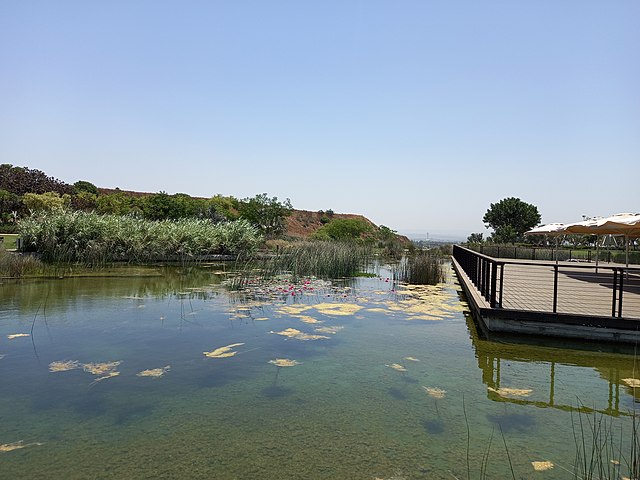
Source: Wikipedia
Haneul Park, Seoul: The transformation of the Nanjido landfill into Haneul Park represents a remarkable example of urban environmental rehabilitation. In 2009, while serving as the Local Government Committee chairman, CM Chow Kon Yeow led a Penang delegation on an exploratory visit to the park, aiming to gain insights into the nation’s innovative landfill rehabilitations.

Source: Wikipedia
Hong Kong: Modular recycling systems manage waste efficiently in limited space, showcasing the power of compact technology in urban settings.
European Municipalities: In-situ reclamation techniques have rehabilitated landfills responsibly, avoiding expansion into natural habitats.
By adopting these alternatives, we can protect the Middle Bank marine sanctuary, reduce pollution, and enhance community well-being. We urge the authorities to launch a transparent review with experts and residents to ensure a sustainable solution for Jelutong Landfill.